Barcode technologies—the fundamental common language of global trade, logistics processes, and supply chain management—are currently on the verge of a deep digital transformation. For nearly half a century, traditional linear (1D) barcodes have formed the backbone of product identification across retail shelves, industrial production lines, and storage facilities. However, they are now falling short of meeting the data-density demands of modern commerce.
Led by GS1, the organization that sets global barcode standards, the international transition process known in the commercial world as “Sunrise 2027” mandates that all Point of Sale (POS) systems must be capable of reading and processing two-dimensional (2D) barcodes (QR codes/Data Matrix).
This shift represents far more than a mere change in the shapes printed on packaging. It requires a complete redesign of business processes, from production to logistics, and food safety to sustainability. Adapting to these new standards in printing and data collection automation is crucial for businesses to maintain their market presence and operational sustainability in today’s highly competitive environment.
From Lines to Squares: Why a New Standard?
Traditional one-dimensional linear barcodes can only hold a limited set of characters. These lines generally transmit only the product’s GTIN (Global Trade Item Number) to the system. Details such as price, name, or specific features can only be pulled from a central database using that number. In today’s digitized market ecosystem, however, both businesses and final consumers demand much higher transparency and real-time information regarding products.
Next-generation 2D barcode standards eliminate dependency on external databases by storing a massive pool of information directly on the label itself. A single 2D barcode can encapsulate:
- The product’s serial number and batch/lot code,
- Expiration date (EXP) and production time,
- Country of origin and supply chain route,
- Dynamic web links (GS1 Digital Link) that customers can scan with smartphones to verify authenticity or access user manuals.
This data density protects consumer health in industries like food and pharmaceuticals by enabling systems to instantly block expired products at the checkout counter. It also prevents counterfeiting in logistics and ensures flawless reverse logistics (returns) management.
Sunrise 2027 and Key Preparations for Businesses
To avoid disruptions in global trade, the established transition timeline requires businesses to upgrade their data infrastructure, hardware inventory, and software systems. Companies aiming to complete this transition successfully should prioritize the following operational steps:
1. Data Structure and ERP Integration Updates
Current ERP, WMS (Warehouse Management System), and accounting software programmed to read only a single product code must be updated. Systems need to seamlessly parse multi-layered data arrays coming from the 2D barcode, including lot numbers, expiration dates, and serial numbers.
2. Transformation of Printing and Labeling Technologies
Next-generation 2D barcodes must be printed onto packaging or labels with much higher precision. While minor smudges on linear barcodes can often be tolerated due to vertical lines, a single-pixel printing error or ink bleeding on a 2D barcode can render it completely unreadable. Consequently, the resolution and print calibrations of automated labeling units and industrial printers on production lines must be optimized.
3. Upgrading Data Collection Hardware
Older generation 1D barcode scanners operating strictly with laser beams cannot physically detect 2D barcode structures. Scan engines across warehouses, receiving areas, production floors, and sales points must be upgraded to modern devices equipped with camera-based imager technology.
World-Class Hardware Solutions in the DGS Portfolio
To achieve sustainable performance and maintain operational quality during the transition to next-generation barcode standards, businesses should rely on globally proven technologies. The leading international solutions setting the standards in data printing, labeling, and mobile data collection include:
2D-Compatible Industrial Mobile Terminals
In field operations and warehouse management, Android-based mobile terminals capable of instantly decoding complex 2D barcodes directly dictate operational speed.
- Zebra TC21 (Wi-Fi) and the cellular-supported Zebra TC26 models offer high efficiency at receiving lines with their lightweight designs and powerful scan engines.
- The Zebra MC3300 series, featuring physical keypad support, is purpose-built for high-rack logistics centers, cold-storage warehouses, and harsh industrial floors.
- The Honeywell EDA52 models ensure staff can transmit next-generation 2D barcodes to WMS systems quickly and accurately, even during the busiest shifts.
Next-Generation Image-Based Barcode Scanners
Whether used on forklifts, at shipping desks, or retail checkout counters, next-generation imagers utilize advanced photographing technology to decode smudged or damaged 2D barcodes within seconds.
- Zebra DS2208 (corded) and Zebra DS2278 (cordless) imaging models serve as the baseline for standard transition processes in retail and general warehouse management.
- For heavy industrial environments, the ultra-rugged, dust- and water-resistant Zebra DS3608 and Zebra DS3678series stand out.
- The Datalogic QuickScan series is renowned for its optical scanning precision, while the Datalogic PowerScanmodels feature “Green Spot” technology, providing a visual green light confirmation to operators on noisy production floors, reducing errors to zero.
- The Honeywell Voyager 1250g, Honeywell Xenon Ultra, and the armored Honeywell Granit series instantly process even the most complex GS1 2D barcode data strings into systems.
High-Resolution Barcode Printers and Labeling Solutions
Flawless printing of 2D barcodes requires high resolution (DPI) and perfect mechanical calibration.
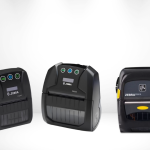
- In the desktop segment, Zebra ZD220 and Zebra ZD421 models offer practical solutions for shipping and product labeling.
- For large production lines and distribution centers operating 24/7, the metal-framed Zebra ZT231, Zebra ZT411, and ultra-rugged Zebra ZT610 industrial series produce crisp, high-resolution 2D barcode prints.
- The Honeywell PC42t and the smart-architecture Honeywell PM45 series offer excellent cost advantages for printing on paper and synthetic labels.
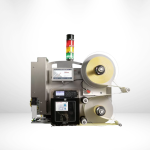
- On automated production lines and weigh-price labeling processes, the world-leading Bizerba GLP and Bizerba GLM-I series automated labeling systems accelerate workflow by printing weight, lot, and 2D barcode data onto physical labels in real time.
- For modular outer-case labeling and high-speed packaging lines, the flexible Weber Alpha Entry, Weber Alpha Compact, and premium Weber Alpha HSM systems—which achieve millimeter accuracy at extreme speeds of up to 2,000 labels per minute—ensure that next-generation data labels are flawlessly applied to products on the conveyor belt.
Best Practices for Maintaining Hardware Performance During Transition
Ensuring that hardware inventories consistently perform at their peak during the migration to next-generation data structures relies on a few practical maintenance steps:
Regular Printhead Cleaning: To print the micro-pixels within 2D barcodes sharply, the printhead must remain free of dust and ink residue. Gently wiping the printhead with specialized isopropyl alcohol cleaning pens during every roll or ribbon change prevents pixel loss and unreadable labels.
Optical Lens Maintenance: Dust or dirt buildup on the front glass panel of imager scanners reduces the camera’s ability to focus. Regular cleaning of these panels with microfiber cloths keeps first-read rates high and slows mechanical trigger wear.
Selecting the Right Consumables: Low-quality labels with rough surfaces cause 2D barcode prints to bleed or smudge. Choosing certified labels and matching ribbon combinations compatible with your device’s technical specifications directly extends both print life and quality.
Prepare for the Future of Commerce with DGS Printing Technologies
Succeeding in this global transformation of barcode technologies requires more than just purchasing new devices; it demands the right engineering vision, seamless system integration, and robust after-sales support. Protecting your business budget while maintaining operational speed and global compliance requires an experienced technical partner.
DGS Printing Technologies (dgs.com.tr) provides comprehensive solutions for your transition to next-generation barcode standards, backed by an extensive spare parts inventory, a rich product selection from global leading brands, and deep industry expertise. We deliver the most suitable Zebra, Honeywell, Datalogic, Bizerba, and Weber mobile terminals, barcode scanners, printers, and automated labeling systems tailored to your industry dynamics, production density, and software infrastructure—all while tailoring alternative options to fit your budget planning.
Moving beyond hardware supply, DGS stands by you full-time with its expert technical service team for troubleshooting, parts replacement, device calibration, system integration, and periodic maintenance. We manage firmware updates to keep your devices performing at the highest level, minimizing operational downtime and label waste. To ensure uninterrupted data flow and experience the peace of mind that comes with professional technical support in today’s demanding market conditions, you can confidently trust the expertise and modern solutions of DGS.