In thermal transfer printing technology, ribbon selection plays a decisive role in terms of label durability and cost efficiency. The differences between wax ribbons and color ribbons stem from ink composition, color variety, and application areas. This article aims to help businesses optimize their printing processes by choosing the right ribbon.
What Is a Wax Ribbon, What Is It Used For, and What Are Its Features?
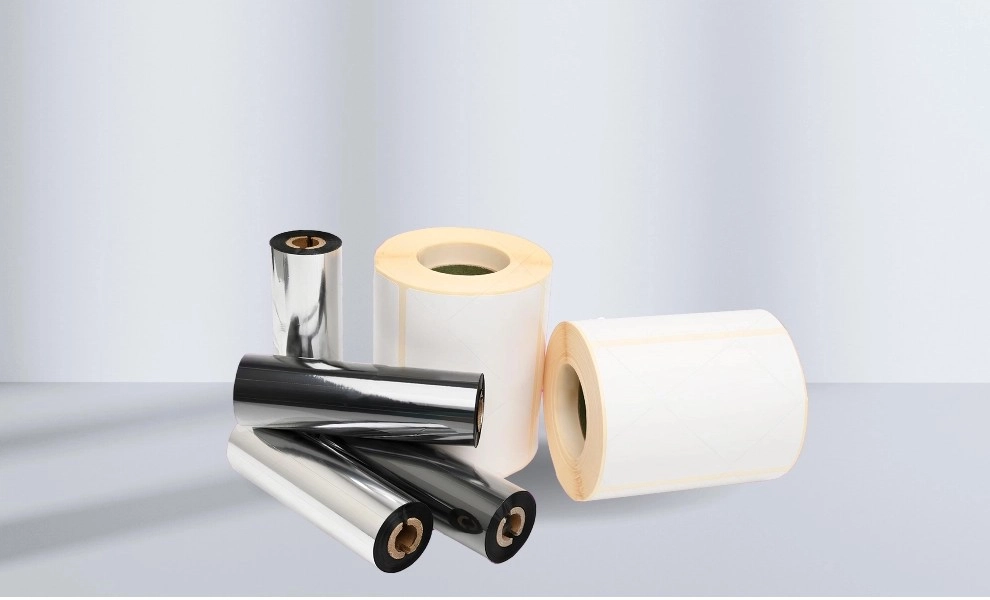
Wax ribbons are wax-based ink ribbons used in thermal transfer printers. The wax melts with heat and is transferred onto the label surface, enabling barcode and text printing.
The main application areas of wax ribbons include:
- Indoor applications such as shelf labels, price tags, and warehouse logistics labels
- High-volume, cost-effective printing on paper-based labels (coated, vellum)
Key features include low cost, high printing speed, and good contrast. However, wax ribbons have limited resistance to abrasion, moisture, and chemicals; therefore, they are suitable for short- to medium-term label applications.
What Is a Color Ribbon, What Is It Used For, and What Are Its Features?
Color ribbons are special ink ribbons that offer color options other than black (red, blue, green, yellow, etc.) in thermal transfer printing. They are generally produced with wax-based color formulations and are used in applications requiring visually appealing, multi-color output.
The main application areas of color ribbons include:
- Promotional labels, color-coded shelf labels, and product visualizations in retail
- Organizational markings, colored barcodes, and marketing materials on paper or synthetic labels
Their features include a wide range of colors, vivid print tones, and a cost-effective wax-based structure. However, like standard wax ribbons, they are primarily suitable for indoor use. Printing with multiple colors may require changing ribbons, which can be optimized using multi-color printers.
Differences Between Wax Ribbon and Color Ribbon
The differences between wax ribbons and color ribbons make it easier to choose based on color capacity and visual application needs. The table below presents the main differences in a comparative format.
| Feature | Wax Ribbon | Color Ribbon |
|---|---|---|
| Ink Composition | Wax-based (black) | Wax-based pigmented (red, blue, green, etc.) |
| Color Options | Single color (black) | Multiple colors (CMYK-like options) |
| Durability | Low–medium (indoor, short lifespan) | Similar (if wax-based: indoor use, limited outdoor durability) |
| Label Compatibility | Paper-based (coated, vellum) | Paper-based, some synthetic surfaces |
| Cost | Low | Medium (slightly higher due to colored formulation) |
| Environmental Resistance | Limited resistance to moisture and abrasion | Similar limitations if wax-based |
| Use Cases | Standard barcodes, warehouse labels | Promotional labels, color-coded signage, visual labels |
Wax ribbons are ideal for standard black printing needs, while color ribbons are indispensable for eye-catching and categorized labeling. The printing purpose, color requirements, and print volume are the key factors in making the right choice.
If you want to improve your print quality with the right ribbon selection and receive professional solutions, DGS Printing Technologies is here to support you. A leader in labels, ribbons, and thermal transfer systems since 2000, DGS stocks wax and color ribbon varieties through original imports. With products sourced from global brands such as ITW Thermal Films and Ricoh, DGS offers customized ribbon recommendations and technical support tailored to your business needs. For more information and orders, you can visit dgs.com.tr/en/ and get in touch.