In thermal transfer printing technology, choosing the right ribbon is crucial for the durability and cost-effectiveness of labels. The differences between wax ribbons and resin ribbons stem from ink composition, application areas, and performance levels. This article aims to help businesses optimize their printing processes by making the right ribbon choice.
What is Wax Ribbon, What Does it Do, and What Are Its Features?
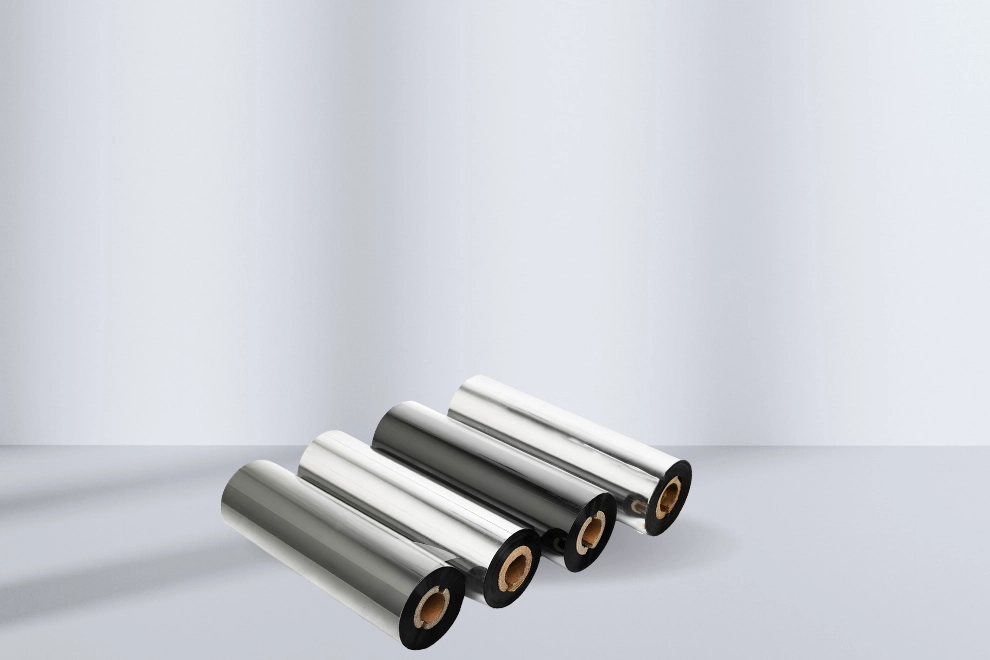
Wax ribbon is a wax-based ink ribbon used in thermal transfer printers. The wax melts with heat and is transferred to the label surface to print barcodes and text.
The primary applications of wax ribbons include:
- In-store applications such as shelf labels, price tags, and warehouse logistics labels.
- High-volume, cost-effective printing on paper-based labels (coated, vellum).
Key features include low cost, high printing speed, and good contrast. However, it has limited durability against abrasion, moisture, and chemicals, making it suitable for short-to-medium lifespan labels.
What is Resin Ribbon, What Does it Do, and What Are Its Features?
Resin ribbon is a high-performance thermal transfer ribbon containing resin-based ink. The resin structure bonds the print permanently to the label, providing resistance to extreme conditions.
Main applications of resin ribbons:
- Long-lasting labels in industries such as automotive, chemicals, electronics, and healthcare.
- Outdoor printing on synthetic materials (PE, PP, PVC, PET).
Features include high chemical, mechanical, and environmental resistance; it offers superior protection against abrasion, solvents, and high temperatures. Although more expensive than wax ribbon, it reduces the need for reprints, thus lowering total costs in the long run.
Differences Between Wax Ribbon and Resin Ribbon
The differences between wax and resin ribbons make it easier to choose based on application needs. The table below compares the fundamental differences:
| Feature | Wax Ribbon | Resin Ribbon |
| Ink Composition | Wax-based | Resin-based |
| Durability | Low-medium (indoor, short lifespan) | High (outdoor, long lifespan) |
| Label Compatibility | Paper-based (coated, vellum) | Synthetic (PE, PP, PVC, PET) |
| Cost | Low | High, but cost-effective in the long run |
| Environmental Resistance | Limited to moisture, abrasion | Maximum resistance to chemicals, heat, abrasion |
| Application Examples | Shelf/price labels, warehouse labels | Industrial, laboratory, serial number labels |
Wax ribbon is ideal for indoor and budget-oriented tasks, while resin ribbon is indispensable for critical and harsh environments. The choice depends on the label material, the conditions it will be exposed to, and the required readability duration.
If you’re looking to improve your print quality and receive professional solutions with the right ribbon selection, DGS Printing Technologies is here to assist you. Since 2000, DGS has been a leader in labels, ribbons, and thermal transfer systems, keeping original imported wax and resin ribbons in stock. With products supplied by global leaders such as ITW Thermal Films and Ricoh, DGS offers tailored ribbon recommendations and technical support for your business.
For more information and to place an order, visit dgs.com.tr/en/ and get in touch with us.