When it comes to safeguarding public health, completely isolating counterfeit products from the market, and ensuring uncompromising traceability across the global supply chain, the pharmaceutical industry is the single domain with zero error tolerance. Every single box, bottle, or ampoule emerging from pharmaceutical production lines carries a biochemical responsibility that directly impacts human life. In today’s regulation-driven world, the complete cycle of a medicine—starting from its synthesis phase in the factory up to the moment it reaches the patient—is secured through digital tracking infrastructures. Turkey’s Pharmaceutical Track and Trace System (İTS), which has pioneered this field on a global scale, has guided global pharmaceutical automation by mandating that every unit product be serialized with a unique identity.
The flawless execution of this strict regulatory chain depends on the technical excellence of the micro-sized 2D DataMatrix codes printed on packaging and high-security labeling components. The medicine labels on pharmaceutical cartons are not merely informational surfaces; they are strategic security shields designed to prevent counterfeiting, ensure statutory verification, and dictate production speeds. Therefore, the requirements for 2D DataMatrix Pharmaceutical Track and Trace Systems in the healthcare industry must be managed down to the finest detail, both in terms of hardware and consumables.
Pharmaceutical Track and Trace System (ITS) Standards and DataMatrix Architecture
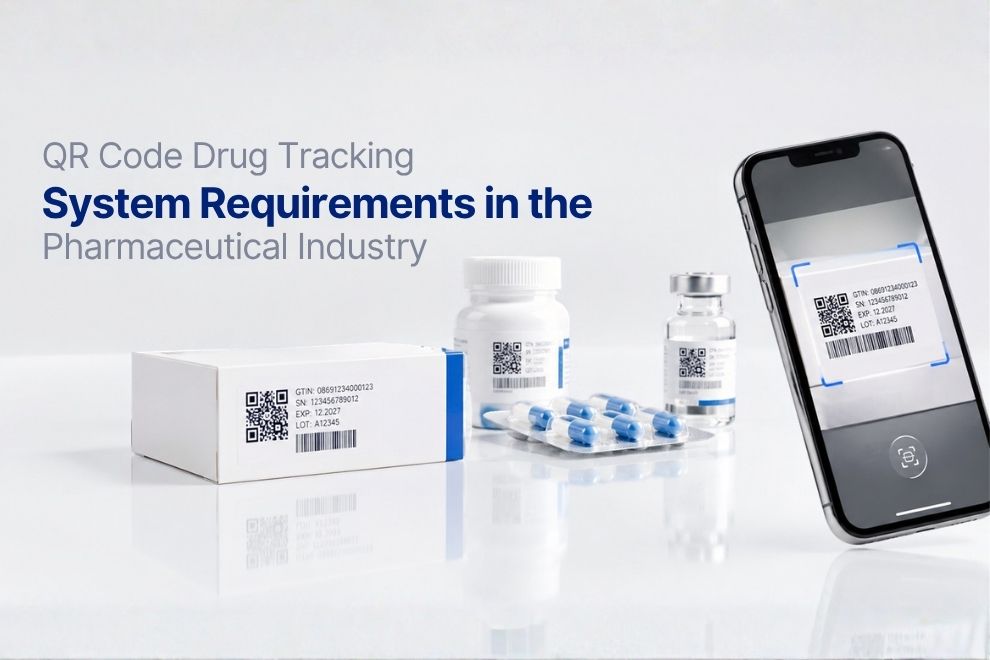
Unlike traditional linear barcodes, the 2D DataMatrix codes utilized in the Pharmaceutical Track and Trace System contain a dynamic data repository fully compliant with GS1 standards. The error-free encoding of the following four primary components within a single DataMatrix on pharmaceutical packaging is mandatory:
- GTIN (Global Trade Item Number – AI 01): The 14-digit global code identifying the commercial identity of the medicine and the marketing authorization holder.
- Serial Number (SN – AI 21): A unique, non-reproducible, randomized alphanumeric identity string assigned to each medicine box only once globally.
- Expiration Date (EXP – AI 17): Critical safety data indicating the expiration of the medicine to the system on a day, month, and year basis.
- Batch / Lot Number (BN – AI 10): The tracking code representing the production batch and enabling the immediate quarantine of the respective lot within seconds during recall procedures.
These four parameters must be rendered inside a micro-sized DataMatrix code with millimetric precision. Even a single-pixel misalignment in the print on the carton, ink smearing, or glare on the medicine label surface will cause the DataMatrix code to be rejected by sorter conveyor belts in pharmaceutical distribution warehouses or by optical scanners in pharmacies. This leads to the suspension of batch distribution and severe statutory penalties.
Selecting the Proper Medicine Label and Consumables in Pharmaceutical Manufacturing
The operational environments to which pharmaceutical packaging is exposed vary considerably. While some products are stored at standard room temperature, vaccines and biotechnological serums are preserved under cold chain conditions between +2°C and +8°C or in ultra-low temperature freezers at −80°C. Consequently, standard packaging materials fail to meet pharmaceutical criteria. The medicine labels engineered for medicine boxes and vials must incorporate the following technical dynamics:
1. Tear-Resistant and Chemically Durable Synthetic Substrates
Polypropylene (PP) or Polyethylene (PE) synthetic facestocks are preferred for glass bottles, ampoules, and plastic vials. These synthetic medicine labels maintain DataMatrix print integrity even when exposed to alcohol, disinfectant, or solvent leaks, resisting deformation against moisture and condensation.
2. Tamper-Evident Security Seals
Security seals demonstrating whether the closure of a medicine carton has been opened previously are a regulatory requirement. Specially formulated tamper-evident medicine label solutions—which tear apart, leave residue, or delaminate the carton surface to destroy themselves when an attempt is made to open the box—prevent counterfeit or compromised products from entering circulation.
3. Low-Migration Specialty Adhesives
Particularly in flexible plastic IV infusion bags and dropper bottles, label adhesives must not migrate through the plastic packaging into the active pharmaceutical ingredient. Medical-grade adhesives utilized in the pharmaceutical industry are formulated from inert compounds fully compliant with international pharmacopeia standards.
Global Hardware Solutions Ensuring Uninterrupted Data Flow on Track and Trace Lines
Running 2D serialization and aggregation workflows smoothly across high-speed conveyor lines requires the integration of globally proven industrial hardware. Prominent global technologies deployed across pharmaceutical manufacturing plants, drug warehouses, and hospital logistics include:
High-Resolution Industrial Barcode Printers
To print micro-sized DataMatrix codes and serial numbers legibly on medicine cartons, high-resolution print engines of 300 or 600 DPI are strictly required. Operating continuously 24/7 within cleanrooms and packaging lines, the metal-framed Zebra ZT231, Zebra ZT411, and the ultra-rugged industrial flagship Zebra ZT610 series apply precise pixels onto synthetic medicine labels using resin ribbons. The Honeywell PM45 industrial series, featuring intelligent print architecture, alongside the Honeywell PC42t models providing cost advantages in coated and thermal label printing, stand as highly dependable assets in manufacturing operations. For laboratory specimen tube labeling and in-pharmacy prescription workflows, the desktop-class Zebra ZD220 and Zebra ZD421 series optimize costs effectively.
High-Speed Automatic Labeling Systems
On production lines processing hundreds of medicine cartons per minute, DataMatrix printing and tamper-evident seal application must be automated hands-free. The Weber family, setting global benchmarks in industrial labeling with its modular architecture, forms the core of this operation. The budget-friendly Weber Alpha Entry for mid-volume lines, the Weber Alpha Compact adapting quickly to varied conveyor structures, and the premium Weber Alpha HSM modular labeling systems applying medicine labels with millimetric precision even at extreme speeds up to 2,000 labels per minute represent the highest-efficiency applicators in the pharmaceutical sector. For checkweighing logistics operations and automated carton dispatch lines, the Bizerba GLP and Bizerba GLM-I series, known for dynamic weighing systems, streamline operational flow.
High-Precision 2D DataMatrix Scanners and Mobile Terminals
Camera-based area-imager scanners are essential for verifying DataMatrix codes and executing case-to-pallet aggregation in pharmaceutical warehouses. At packaging tables and dispatch lines, the corded Zebra DS2208 and cordless Zebra DS2278 models instantly decode symbols on reflective pharmaceutical boxes, while the rugged Zebra DS3608 and cordless Zebra DS3678 models handle demanding industrial environments. The Datalogic PowerScan and Datalogic QuickScan models, which provide immediate visual confirmation to operators via green spot technology, alongside scanning specialists like the Honeywell Voyager 1250g, Honeywell Xenon Ultra, and the ruggedized Honeywell Granit series, eliminate human error in DataMatrix verification.
For warehouse order picking, cold room management, and receiving, the Android-powered Zebra TC21, cellular-connected Zebra TC26, and the industrial Zebra MC3300 mobile terminals—equipped with physical keypads allowing operators to work accurately even while wearing cleanroom gloves—along with ergonomic Honeywell EDA52 models, establish seamless synchronization with WMS platforms.
Maintenance Recommendations for Preserving Print Quality on Pharmaceutical Lines
To maintain regulatory compliance for DataMatrix printing under Track and Trace standards and avoid unplanned line stops, the following technical maintenance routines should be implemented:
- Thermal Printhead Maintenance: Black and white modules within micro DataMatrix codes demand sharp edge definition. Even microscopic carbon build-up on the printhead distorts the code’s geometry. Cleaning the thermal printhead with isopropyl alcohol cleaning pens during every label roll or ribbon change prevents premature pixel burnout.
- Camera and Sensor Lens Cleanliness: The optical glass surfaces of automated vision verification cameras along conveyors and mobile terminals must be kept spotless. Dusty lenses increase focusing latency, raising false reject rates along the production belt.
- Balancing Darkness and Print Speed: Excessively increasing darkness levels in software causes ink to bleed over the label substrate. To achieve ideal grading (ISO/IEC 15415 Grade A or B), printer speed and heat parameters must be balanced and calibrated methodically.
Zero-Defect Traceability in Pharmaceuticals with DGS Printing Technologies
Achieving sustainable operations in the heavily regulated pharmaceutical ecosystem requires more than just procuring standalone hardware or consumables; it demands sound engineering expertise, certified consumable provisioning, and responsive technical support.
DGS Printing Technologies (dgs.com.tr) delivers end-to-end solutions for pharmaceutical facilities and drug distribution centers through an extensive inventory of compliant medicine labels, a global hardware portfolio, and deep industry experience. While equipping your facility with the most suitable Zebra, Honeywell, Datalogic, Bizerba, and Weber barcode printers, applicators, mobile terminals, and DataMatrix scanners tailored to your capacity and line velocity, we also provide flexible procurement models that protect your capital.
Beyond serving as a hardware supplier, DGS stands by your side full-time with an experienced technical service team for on-site deployment, Track and Trace software integration, original spare parts provisioning (printheads, platen rollers, sensors), and periodic validation support. You can rely on the modern technologies and engineering capabilities of DGS to mitigate compliance risks and attain global standards in pharmaceutical traceability. For all your pharmaceutical labeling, hardware, and technical service requirements, DGS remains your reliable and specialized solution partner.