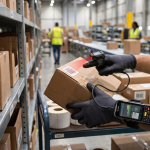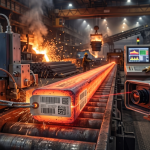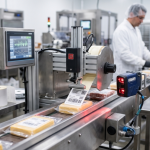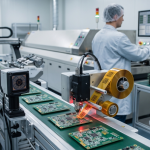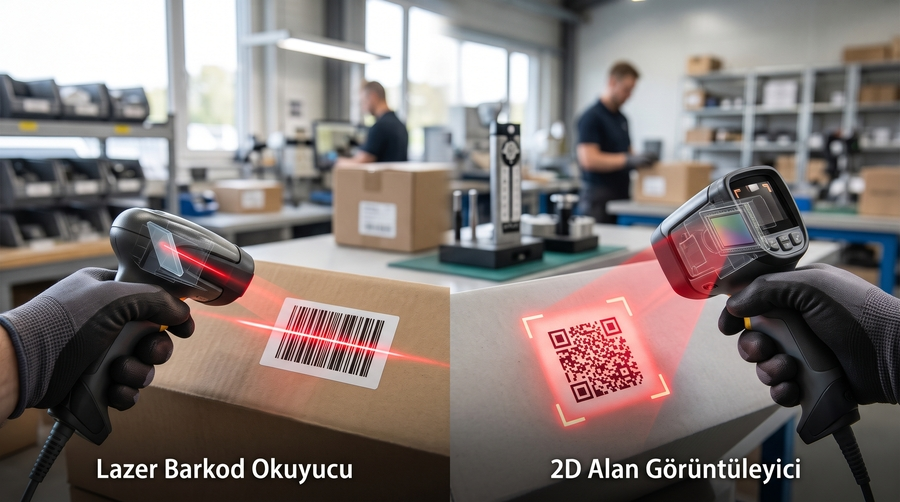
Optical identification systems serve as the foundational bridge transferring data from the physical world into digital platforms at every stage of the supply chain. From the millisecond cycle times of manufacturing lines and the dusty shelves of logistics warehouses to retail checkout counters and the sterile environments of healthcare laboratories, fast and accurate data capture is the cornerstone of operational success. Within this digitization journey, the most common technical dilemma lies between traditional laser scanners and next-generation, camera-based 2D area imager systems.
Linear laser scanners, once considered the undisputed industry standard, are rapidly giving way to area imager technologies powered by machine vision algorithms and high-resolution sensors. Selecting the right technology is not merely a hardware procurement decision; it is an operational investment directly impacting workforce efficiency, first-time read rates, and total cost of ownership (TCO). Evaluating the decoding performance of linear lasers versus camera-based 2D area imagers on damaged, dirty, and faint barcodes through an objective, analytical lens enables enterprises to invest in the right hardware architecture.
Fundamental Working Principles: Laser vs. Area Imager Technologies
While both technologies decode digital information by analyzing contrast variations on a label, the underlying physical and optical mechanisms differ entirely:
- Laser Barcode Scanner Mechanics: Laser scanners emit a concentrated, single beam of red light onto the code.An internal mechanical assembly consisting of a motorized oscillating mirror or prism sweeps the laser beam back and forth across the barcode in a horizontal line. The dark bars absorb the light, while the light spaces reflect it back. A photodiode detector captures these fluctuations in reflected light intensity and converts them into an electrical waveform to decode the symbol as a 1D linear profile.
- Area Imager Barcode Scanner Mechanics: An area imager functions essentially as a high-speed industrial digital camera. It illuminates the targeted surface using integrated LED arrays and captures a two-dimensional digital frame via a CMOS or CCD array sensor. This captured image is instantly processed by an onboard digital signal processor (DSP) and sophisticated decoding algorithms, deciphering 1D, 2D, or composite symbologies within milliseconds regardless of alignment.
Decoding Performance on Damaged, Faint, and Torn Barcodes
In industrial environments, printed labels rarely remain in pristine condition. Abrasion during transit, moisture exposure,thermal printhead scratches resulting in missing lines, or fading due to environmental wear are everyday realities. Under these demanding conditions, the performance gap between the two technologies becomes distinctly apparent:
1. Linear Defects and Voids
A laser scanner relies exclusively on a single unbroken line traversing the symbol. If a vertical tear, scratch, or print void cuts across the code, the laser sweep suffers a data dropout, causing the scan to fail. The operator must manually reposition the beam over an undamaged section of the label. In contrast, an area imager captures the entire symbol as a 2D image matrix. Its error-correction algorithms reconstruct missing pixels and mathematically interpolate damaged elements, successfully decoding the barcode on the initial pass.
2. Low Contrast and Faded Prints
Direct thermal labels exposed to heat or sunlight frequently suffer from background yellowing, substantially reducing the optical contrast between the dark bars and light spaces. While lasers struggle to register low differential reflectance,modern area imagers apply real-time algorithmic exposure, brightness, and contrast filters to extract and decode low-contrast data.
3. Specular Reflection and Codes Behind Shrink Wrap
In distribution centers, glossy stretch wrap wound tightly around pallets or high-gloss protective coatings on pharmaceutical packaging cause specular glare. This direct retroreflection blinds the photodiode of a laser scanner,creating dead spots. Area imagers resolve this issue through integrated polarizing filters and diffused illumination patterns that neutralize glare, cleanly capturing barcodes beneath reflective films.
Omnidirectional Scanning and Operational Throughput
A major operational bottleneck of traditional laser scanners is the requirement to align the laser line roughly perpendicular to the barcode’s bars. Operators must repeatedly twist their wrists or rotate items to achieve proper alignment,accumulating substantial ergonomic strain and time loss across thousands of scans per shift.
Area imagers deliver complete 360-degree omnidirectional scanning. Whether the barcode is presented right-side up,inverted, or tilted at a 45-degree angle, orientation is irrelevant because the sensor captures the entire field of view at once. The code is decoded instantaneously as it moves along a conveyor or passes before an operator. This capability dramatically accelerates throughput across high-speed sorting belts and retail checkout lanes.
Electronic Screen Reading and 2D Symbology Support
With the widespread adoption of digital workflows, mobile ticketing, e-waybills, loyalty apps, and smartphone-based QR codes have become ubiquitous across enterprise operations:
- Screen Compatibility: Laser beams bounce off the protective glass covers of LCD and OLED screens like mirrors,failing to resolve the pixels underneath. Area imagers capture digital displays photographically, reading on-screen codes through screen glare without hesitation.
- 2D Code Support (DataMatrix, QR Code): Due to their one-dimensional optical mechanics, laser scanners can only read linear 1D barcodes (such as EAN-13, GS1-128, and Code 39); they cannot decode 2D DataMatrix or QR codes. Across pharmaceutical serialization, automotive direct part marking (DPM), and food traceability where 2D codes are mandatory, area imager technology is the only viable option.
Mechanical Durability and Total Cost of Ownership (TCO)
When evaluating hardware investments, baseline acquisition price must be balanced against maintenance intervals and failure risks:
- Moving Parts Vulnerability: Laser scanners rely on mechanical assemblies featuring micro-mirrors oscillating at high frequencies. When a handheld device is dropped onto concrete, the most frequent failure modes involve shattered mirrors or misaligned optical paths.
- Solid-State Reliability: Area imagers are built upon solid-state architectures containing zero moving parts. The camera sensor, optics, and illumination arrays are soldered directly to internal circuit boards. This design provides superior resilience against repeated drops, heavy impacts, and continuous industrial vibrations.
Global Scanning and Printing Systems Driving Industrial Workflows
Building an error-free data collection workflow requires matching the right optical capture technology with rugged,enterprise-grade printing infrastructure. Leading industrial hardware architectures deployed globally across production and logistics facilities include:
Advanced Imager and Laser Scanning Systems
For packaging stations and general retail environments, corded Zebra DS2208 and cordless Zebra DS2278 2D imagers deliver seamless speed on reflective surfaces and electronic screens. In high-bay distribution centers, port terminals, and forklift operations, ultra-rugged corded Zebra DS3608 and cordless Zebra DS3678 Extended Range (ER) series read damaged or distant barcodes from several meters away.
Additionally, Datalogic PowerScan and QuickScan series utilize patented “Green Spot” visual confirmation technology for instant good-read feedback in high-noise environments. In parallel, Honeywell’s scanning portfolio—anchored by the high-performance Honeywell Voyager 1250g 1D linear laser, the versatile Honeywell Xenon Ultra, and the ultra-rugged Honeywell Granit series—ensures robust data accuracy under severe operational conditions.
Industrial Barcode Printing and Mobile Data Terminals
High-speed data capture begins with crisp, high-contrast label production. For continuous 24/7 manufacturing operations,all-metal workhorses such as the Zebra ZT610, Zebra ZT411, and the mid-tier Zebra ZT231 deliver high-density thermal transfer printing engineered for instant optical recognition.
The Honeywell PM45 industrial series stands out with its precision print mechanisms, while the Honeywell PC42t offers a dependable desktop solution for standard shipping and warehouse labels. For space-constrained packing benches and healthcare labs, compact desktop printers such as the Zebra ZD421 and Zebra ZD220 combine footprint efficiency with high reliability.
For inventory picking and inbound receiving, key-based rugged mobile computers like the Zebra MC3300 series optimize high-throughput warehouse tasks. In field mobility and distribution, Android-based touch computers—such as the Zebra TC21, the cellular-enabled Zebra TC26, and the ergonomically balanced Honeywell EDA52—maintain continuous system integration. Automated production lines are further supported by high-speed print-and-apply modules, including the Weber Alpha Entry, Weber Alpha Compact, and Weber Alpha HSM, paired with Bizerba GLP and dynamic GLM-I series for end-of-line industrial weighing and automated labeling.
Which Technology Best Fits Your Operations?
| Criteria / Operational Need | Linear Laser Scanners | 2D Area Imager Scanners |
| Symbology Support | 1D Linear Barcodes Only | 1D, 2D (DataMatrix, QR), DPM, OCR |
| Damaged / Poor-Quality Labels | Low (Vulnerable to single-line dropouts) | High (Image processing algorithms restore data) |
| Scanning Freedom | Low (Requires horizontal beam alignment) | Omnidirectional (True 360° orientation-free scanning) |
| Screen Reading Capability | Unsupported (Blinded by glass reflection) | Native (Reads phones, tablets, and monitors) |
| Mechanical Durability | Moderate (Oscillating motor/mirrors prone to drop damage) | High (Solid-state architecture with no moving parts) |
| Upfront Cost vs. TCO | Low initial cost | Moderate initial cost / Significantly lower long-term TCO |
For basic workstations with tight budget caps processing only standardized 1D paper labels, linear laser scanners remain a functional choice. However, across modern warehousing, high-throughput manufacturing, and omni-channel retail operations where speed, damaged label tolerance, 2D symbologies, and physical durability are paramount, 2D area imagers represent the superior long-term investment.
Strategic Optical Identification Solutions with DGS Printing Technologies
Selecting the right optical identification infrastructure requires an engineering approach that accounts for ambient lighting, label substrates, conveyor transit speeds, and total budgetary requirements.
DGS Printing Technologies (dgs.com.tr) designs and delivers tailored scanning and printing solutions backed by comprehensive label and ribbon inventory, an extensive global hardware portfolio, and deep field experience. We configure and integrate Zebra, Honeywell, Datalogic, Bizerba, and Weber imager or laser scanners, industrial barcode printers, mobile enterprise terminals, and automated label applicators directly into your production lines through flexible procurement models.
Beyond hardware supply, DGS provides on-site field testing, scan-angle optimization, software integration, genuine spare parts fulfillment, and comprehensive maintenance agreements to protect system uptime. To minimize scanning exceptions and maximize operational velocity across your facilities, partner with the engineering and technology expertise of DGS.