In today fast paced commercial landscape, the race against time in warehousing facilities, which form the heartbeat of logistics operations, grows more intense every day. Where customer satisfaction is measured directly by delivery speed and accuracy, even the smallest disruption in the supply chain can lead to severe financial and reputational losses. Receiving, picking, packing, and dispatch processes that are managed manually, especially during peak order periods, become exceptionally prone to human error.
Shipping errors, defined as sending the wrong product, the incorrect quantity, or delivering to an improper address, substantially increase reverse logistics costs while severely undermining operational efficiency. How can large storage facilities and complex distribution centers bring these processes under complete control? The answer lies in end to end smart integrations and robust data collection hardware powered by modern technology.
The Risks of Manual Processes and the Cost of Shipping Errors
In traditional warehouse workflows managed via paper and pen, staff distractions or mixed up product codes are bound to happen. Mis shelving products that share similar packaging but possess different barcodes or serial numbers, known as location or slotting errors, creates a domino effect during order picking. Even if workers believe they are picking the correct item from the shelf, the inability to verify the data entered into the system inevitably results in a shipping error.
The cost of shipping errors to a business extends far beyond the return shipping fees paid to send an item back. This situation brings along:
- Time losses incurred while returning the item to the warehouse
- Extra labor hours spent managing return and exchange workflows
- Operational expenses such as repackaging, relabeling, and re invoicing
- And most importantly damage to customer trust and brand loyalty
To achieve sustainable growth without compromising operational quality, businesses are digitizing their processes to mitigate these financial losses. Warehouse management automation lays the foundation for error free operations by transitioning workflows from paper based methods to real time digital data.
The Power of WMS Systems and Data Collection Technologies
Warehouse automation rests on two main pillars. The first is WMS (Warehouse Management System) software, which acts as the brain of the operation. The second is mobile data collection hardware, which serves as the eyes and ears of that software on the warehouse floor. WMS software digitally maps out the exact shelf, level, and quantity of every item entering the warehouse. However, for this software to run at peak performance, the incoming field data must be instantaneous and 100% accurate.
This is where industrial data collection devices come into play, synchronizing every step taken by staff directly with the WMS. Warehouse automation eliminates shipping errors through a three stage control mechanism:
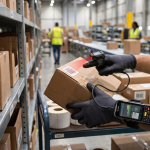
- Accurate Receiving and Location Assignment: Incoming products are scanned at the dock, logged into the system, and assigned to the most optimal shelf recommended by the WMS. If a worker attempts to place an item on the wrong shelf, the hardware alerts them using visual and audible cues.
- Error Free Picking: When an order is received, the system calculates the most efficient walking route through the warehouse and guides the worker to the correct shelf address. When the worker scans the item on the shelf, the WMS verifies it against the order form barcode in real time. If an incorrect item is scanned, the process will not proceed to the next step.
- Dispatch and Shipping Verification (Packing and Shipping): Once picked items arrive at the dispatch area, they undergo a final scan before being boxed and loaded onto the designated transport vehicle. This triple barrier layer mathematically eliminates the possibility of shipping errors.
Leading Global Solutions in Warehouse Automation
Achieving seamless performance in data capture and labeling processes requires investing in field proven hardware from globally recognized manufacturers. Outstanding device categories setting industrial warehouse automation standards today include:
Industrial Mobile Terminals
Android based mobile terminals dictate operational speed across warehouse mobility workflows. Industry leaders such as the lightweight Zebra TC21 and the cellular enabled Zebra TC26 deliver high efficiency on receiving and order picking lines thanks to their sleek designs and powerful processors. Built for dense warehouse footprints, high bay logistics centers, and heavy industrial environments, the physical keypad and pistol grip equipped Zebra MC3300 series and the ultra rugged Honeywell EDA52 enable operators to work reliably under challenging floor conditions, even while wearing gloves, without risk of failure.
Advanced Barcode Scanning Systems
Scanners used fixed on packaging tables, mobile on forklifts, or cordless in hand accelerate overall data flow. While the Zebra DS2208 corded and Zebra DS2278 cordless models set the standard for retail and general warehouse management, the ultra rugged Zebra DS3608 and Zebra DS3678 series lead the way in dusty, humid, and heavy industrial environments. Known for exceptional optical precision, the Datalogic QuickScan series and the Datalogic PowerScan models, equipped with patented Green Spot technology that projects a visual green feedback beam right on the code upon a good read, virtually eliminate operational errors in noisy factory settings. For challenging 2D barcode scanning, the Honeywell Voyager 1250g, Honeywell Xenon Ultra, and the armored Honeywell Granit series guarantee uninterrupted performance across demanding shifts.
Industrial Barcode Printers and Labeling Solutions
Printing clear, durable labels is essential for accurate order addressing and slotting. In the desktop segment, the Zebra ZD220 and Zebra ZD421 offer outstanding price to performance for shipping labels. For large distribution centers operating 24 hours a day and 7 days a week, metal framed industrial series like the Zebra ZT231, Zebra ZT411, and the ultra durable Zebra ZT610 deliver flawless print quality. The Honeywell PC42t delivering great cost efficiency for coated and thermal paper labels alongside the smart chassis Honeywell PM45 series remain essential components of warehouse workflows. For automated production lines and weigh price logistics, world leaders like the Bizerba GLP and Bizerba GLM I series automatic labeling systems convert weight and barcode data into physical labels in seconds to speed up operational throughput.
User Recommendations to Extend Hardware Lifespan and Improve Read Rates
After making the right technology investments, keeping hardware operating at peak performance on the floor is entirely in the hands of the business. A few practical maintenance habits during daily warehouse operations prevent unexpected downtime caused by device failures:
- Optics and Lens Cleaning: Scanner window glass on mobile terminals and barcode readers can become cloudy over time due to warehouse dust. Cleaning these optical windows regularly with non abrasive microfiber cloths and specialized cleaning solutions maintains high first time read rates and prevents staff from repeatedly pulling the trigger, thereby slowing down mechanical wear.
- Proper Charging Routines: To protect the lifespan of lithium batteries used in wireless mobile terminals and scanners, devices should only be charged using their dedicated original charging docks or cradles. Charging batteries before they drain completely preserves overall battery health over time.
- Printhead Maintenance: Thermal printheads, which are the most sensitive component of barcode printers, should be gently wiped down with specialized cleaning pens during every ribbon or media roll change. Uncleaned residue buildup causes scratches and leaves blank spots on printed barcodes, making it difficult for scanners to read the codes.
Uninterrupted Warehouse Automation with DGS Printing Technologies
Achieving sustainable success in logistics and warehousing requires far more than just purchasing boxed hardware. It requires proper engineering, system integration, and dedicated post sales technical support. Protecting your business budget without compromising operational speed or shipping accuracy calls for an experienced partner in the field.
DGS Printing Technologies offers comprehensive warehouse automation solutions tailored to your operational needs, backed by an extensive spare parts inventory, a rich portfolio of global brand hardware, and deep industry expertise. Whether supplying mobile terminals, barcode scanners, or printer models from Zebra, Honeywell, Datalogic, and Bizerba tailored to your warehouse footprint, volume, and software architecture, we deliver solutions optimized for your budget.
DGS goes beyond being a simple hardware vendor to act as your full service technical partner. Our team of experienced technicians supports you with fault diagnosis, spare part replacements, device calibration, system integration, and scheduled preventative maintenance. We handle hardware and software updates to maximize equipment lifespan, minimizing operational downtime and shipping error rates. You can rely on the expertise and modern technologies of DGS to achieve error free data flows and enjoy full service technical support in today competitive landscape. For all technical service and data collection hardware inquiries, DGS is your trusted guide.